

Hey there! As a supplier of gasoline belt tillers, I often get asked about the weight of these machines. It's a crucial factor, especially when you're thinking about transportation, maneuverability, and overall usability. So, let's dive right in and talk about what goes into the weight of a gasoline belt tiller.
First off, it's important to understand that the weight of a gasoline belt tiller can vary widely depending on several factors. One of the main things that influence the weight is the size and power of the engine. Generally speaking, a more powerful engine will be heavier. For example, a small tiller with a low - horsepower engine might weigh around 30 to 50 pounds. These are usually the ones designed for light - duty tasks like weeding in small gardens or working on soft soil.
On the other hand, if you're looking at a heavy - duty gasoline belt tiller with a high - horsepower engine, you could be looking at a weight of 100 pounds or more. These beasts are built to handle tough jobs, like breaking up hard, compacted soil or tilling large areas of land. The extra weight in these models comes from the larger engine components, stronger frames, and more robust tilling attachments.
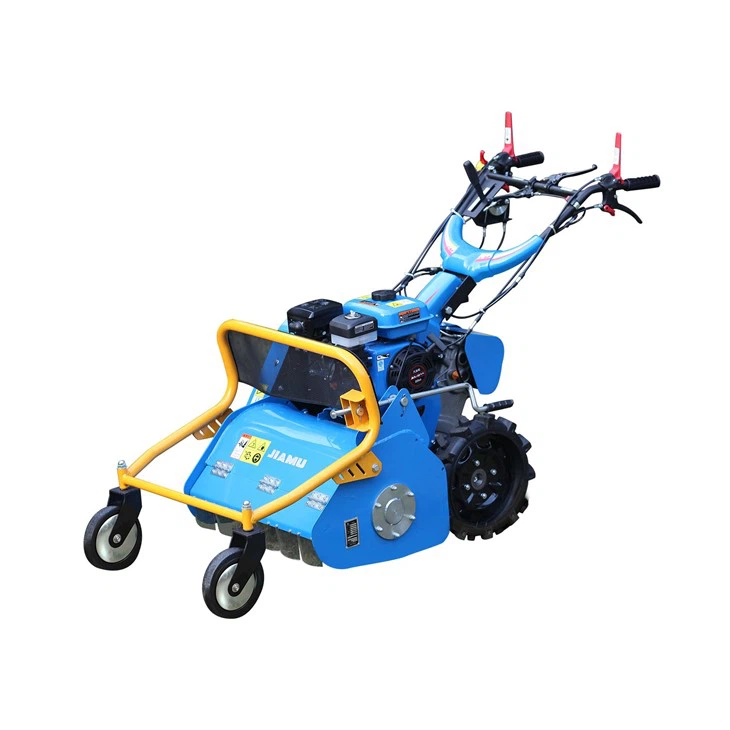
Another factor that affects the weight is the type of tilling mechanism. There are different types of tillers out there, such as Wheel Grass Cutter, Rotary Power Tiller, and Grass Chopper Cutting Machine. Each of these has its own unique design and weight characteristics.
A wheel grass cutter, for instance, is often relatively lightweight because it's mainly designed for cutting grass and light vegetation. It doesn't need to have a super - heavy frame or large engine to do its job. The wheels and the cutting mechanism are usually the main components, and they're designed to be easy to move around.
In contrast, a rotary power tiller is designed to dig deep into the soil. It has a heavy - duty rotor that spins at high speeds to break up the earth. This rotor, along with the engine and the frame that supports it, adds a significant amount of weight to the machine. The grass chopper cutting machine, while similar in some ways to the wheel grass cutter, might be heavier if it has a more powerful motor and a larger cutting chamber.
The materials used in the construction of the tiller also play a big role in its weight. Tillers made from high - quality steel will generally be heavier than those made from aluminum or other lightweight materials. Steel is strong and durable, which is great for withstanding the rigors of tilling, but it comes at the cost of added weight. Aluminum, on the other hand, is lighter but might not be as strong in the long run.
Now, you might be wondering why the weight of a gasoline belt tiller matters. Well, if you're planning to move the tiller around a lot, a lighter model will be much easier to handle. You won't have to struggle as much when loading it into a truck or moving it from one part of your garden to another. However, if you're dealing with tough soil conditions, a heavier tiller can actually be an advantage. The extra weight helps to keep the tiller stable and gives it more force to break through hard ground.
When you're considering buying a gasoline belt tiller, it's important to think about your specific needs. If you have a small garden and only need to do some light weeding and tilling, a lightweight tiller will probably be sufficient. But if you're a professional landscaper or you have a large area of land to work on, you'll likely need a heavier, more powerful tiller.
Let's talk a bit more about the practical implications of the weight. When it comes to transportation, a heavy tiller might require a larger vehicle to move it. You'll also need to make sure you have the proper equipment to load and unload it safely. For example, if you're using a pickup truck, you might need a ramp to get the tiller in and out.
Maneuverability is another aspect affected by weight. A lighter tiller is generally easier to turn and move around tight spaces. This can be a huge advantage when you're working in a small garden with lots of obstacles. A heavy tiller, however, might be more difficult to steer, especially if you're not used to handling large machines.
Maintenance is also something to consider. Heavier tillers often have more complex engines and components, which can make them more difficult to work on. You might need to have some mechanical skills or take the tiller to a professional for repairs. Lighter tillers, on the other hand, are usually simpler in design and easier to maintain.
As a supplier, I always try to provide my customers with the information they need to make the right choice. That's why I'm so passionate about talking about the weight of gasoline belt tillers. It's not just a number; it's an important factor that can impact how well the tiller works for you.

If you're in the market for a gasoline belt tiller, I'd love to help you find the perfect one. Whether you need a lightweight model for your small garden or a heavy - duty tiller for large - scale projects, I've got you covered. Just reach out to me, and we can start talking about your specific requirements.

In conclusion, the weight of a gasoline belt tiller is determined by several factors, including the engine size, tilling mechanism, and materials used in construction. It's an important consideration that can affect transportation, maneuverability, and maintenance. So, before you make a purchase, take the time to think about what you need and how the weight of the tiller will fit into your plans.
If you're interested in learning more about our range of gasoline belt tillers or have any questions about the weight or other features, don't hesitate to get in touch. We're here to help you make the best decision for your gardening or landscaping needs.
References:
- Agricultural Machinery Handbook
- Gasoline - Powered Equipment Manuals


