

As a supplier of small skid loaders, I've witnessed firsthand the incredible versatility and efficiency these machines bring to various job sites. One of the most fascinating aspects of a small skid loader is its steering system, which is not only crucial for the machine's maneuverability but also a testament to engineering ingenuity. In this blog post, I'll delve into the inner workings of the steering system of a small skid loader, shedding light on how it enables these compact powerhouses to navigate tight spaces with ease.
The Basics of Skid Steer Steering
Skid steer loaders are unique in their steering mechanism compared to traditional wheeled or tracked vehicles. Instead of using a steering wheel to turn the front wheels, skid steer loaders rely on differential steering. This means that the speed and direction of each side of the loader can be independently controlled, allowing the machine to turn by skidding its wheels or tracks.
The steering system of a small skid loader typically consists of two main components: the hydraulic system and the control levers. The hydraulic system provides the power needed to drive the wheels or tracks, while the control levers allow the operator to adjust the speed and direction of each side of the loader.
The Hydraulic System
The hydraulic system is the heart of the steering system in a small skid loader. It uses pressurized fluid to transfer power from the engine to the wheels or tracks, enabling the machine to move forward, backward, and turn.
At the center of the hydraulic system is the hydraulic pump, which is driven by the engine. The pump draws hydraulic fluid from a reservoir and pressurizes it, sending it through a series of valves and hoses to the hydraulic motors located at each wheel or track.
The hydraulic motors are responsible for converting the hydraulic energy into mechanical energy, which drives the wheels or tracks. By adjusting the flow of hydraulic fluid to each motor, the operator can control the speed and direction of each side of the loader.
The Control Levers
The control levers are the interface between the operator and the steering system. They allow the operator to adjust the speed and direction of each side of the loader, enabling precise control and maneuverability.
Most small skid loaders are equipped with two control levers, one for the left side of the loader and one for the right side. Each lever has two axes of movement: forward and backward, and left and right.
When the operator moves the left control lever forward, it increases the speed of the left side of the loader, causing the machine to turn right. Conversely, when the operator moves the right control lever forward, it increases the speed of the right side of the loader, causing the machine to turn left.
By moving both control levers forward or backward simultaneously, the operator can drive the loader straight forward or backward. By moving one control lever forward and the other backward, the operator can perform a zero-radius turn, allowing the loader to pivot on its axis.
Advantages of Skid Steer Steering
The skid steer steering system offers several advantages over traditional steering systems, making it ideal for a wide range of applications.
One of the main advantages of skid steer steering is its exceptional maneuverability. Because the loader can turn by skidding its wheels or tracks, it can navigate tight spaces and make sharp turns with ease. This makes it perfect for working in confined areas such as construction sites, warehouses, and landscaping projects.
Another advantage of skid steer steering is its simplicity and reliability. The hydraulic system and control levers are relatively simple in design, with fewer moving parts compared to traditional steering systems. This means that there are fewer components that can fail, reducing the risk of breakdowns and maintenance costs.

Skid steer loaders also offer excellent traction and stability. The differential steering system allows the loader to distribute its weight evenly across all four wheels or tracks, providing better traction on uneven terrain. This makes it suitable for working in a variety of conditions, including mud, snow, and rough terrain.
Applications of Small Skid Loaders
The versatility and maneuverability of small skid loaders make them suitable for a wide range of applications. Here are some common uses for small skid loaders:
- Construction: Small skid loaders are commonly used on construction sites for tasks such as excavation, grading, and material handling. Their compact size and maneuverability allow them to work in tight spaces and around obstacles, making them ideal for urban construction projects.
- Landscaping: Skid loaders are also popular in the landscaping industry for tasks such as digging, planting, and moving materials. Their ability to turn on a dime and navigate through narrow pathways makes them perfect for working in gardens, parks, and other outdoor spaces.
- Agriculture: Small skid loaders can be used on farms for a variety of tasks, including feeding livestock, moving hay bales, and cleaning barns. Their versatility and ease of use make them a valuable asset for farmers of all sizes.
- Warehousing and Logistics: Skid loaders are often used in warehouses and distribution centers for tasks such as loading and unloading trucks, moving pallets, and organizing inventory. Their compact size and maneuverability allow them to work efficiently in tight spaces, improving productivity and reducing labor costs.
Related Products
In addition to small skid loaders, we also offer a range of other construction machinery to meet the diverse needs of our customers. Here are some of our related products:
- Side Tipping Dumper: Our side tipping dumpers are designed for efficient material handling and transportation. They feature a hydraulic tipping mechanism that allows for easy unloading of materials, making them ideal for construction sites, mines, and quarries.
- High Tip Mini Dumper: Our high tip mini dumpers are perfect for small-scale construction and landscaping projects. They offer a high tipping height, allowing for easy unloading of materials into trucks or containers.
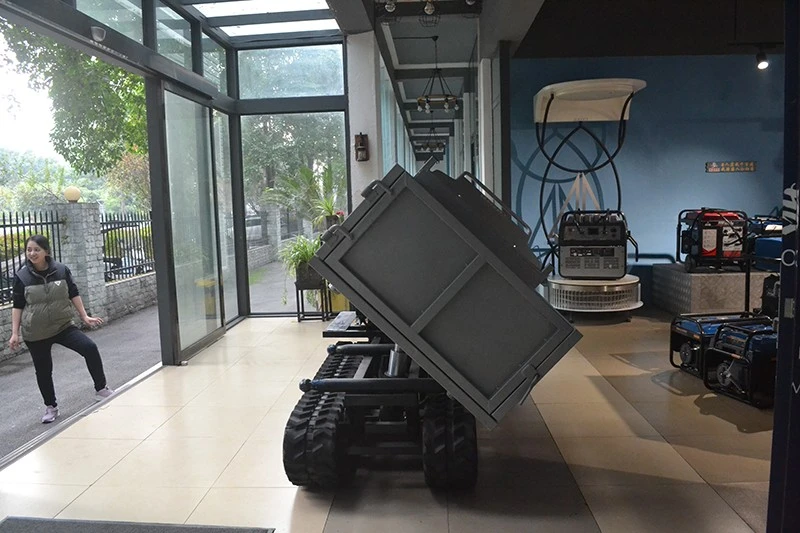
- Mini Crawler Dumper: Our mini crawler dumpers are designed for use in difficult terrain and confined spaces. They feature a tracked chassis that provides excellent traction and stability, making them suitable for working on slopes, mud, and other challenging surfaces.
Contact Us for Purchasing
If you're interested in learning more about our small skid loaders or any of our other construction machinery, we'd love to hear from you. Our team of experts is available to answer your questions, provide product information, and assist you with your purchasing decision.
Whether you're a contractor, landscaper, farmer, or warehouse manager, we have the right equipment to meet your needs. Contact us today to discuss your requirements and explore our range of products.
References
- "Skid Steer Loaders: An Overview." Construction Equipment Guide.
- "How Skid Steer Loaders Work." Popular Mechanics.
- "Hydraulic Systems in Construction Machinery." Hydraulics & Pneumatics.


